A Friends Making Machine
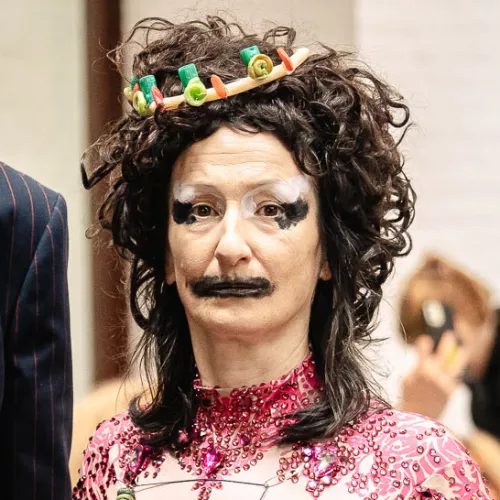
Artist Poster by Monster Chetwynd
For the exhibition A Friends Making Machine, Monster Chetwynd wrote a text that the museum published as an Artist Poster. In a conversation with the animals, the artist talks about the concept behind the exhibition. You can find the Artist Poster in the free visitor guide.
Short intro by the pine processionary caterpillar:
We are at the Middelheim Museum, watching an interview between the artist Monster Chetwynd and different elements in the park. From time to time, the artist becomes excited and gently lifts off the ground, filled with natural energy.
A tick tells a story:
There is a true animal-hero story about a small child on holiday with their parents. While the parents were fishing on a lake, their boat capsized and they drowned, leaving the child alone and in shock. The child tried to walk to a nearby town, but night fell. The child became tired, laid down on the road and fell asleep. As the temperature dropped below zero, the story should have ended there. Instead, three beavers curled up around the child and kept them warm through the night, saving the child’s life.
Do you think the child grew up thinking the parents were irresponsible—or did they see how deeply we are supported, connected, and held by the natural world?
Part of a Larger Whole
MCH: Yes. I’m always reminded that we have to take care of our mental health and our body in relation to the bigger environment. The solar system is a much better “address” than our small postcodes, streets and cities.
The tick: Do you think the heroic beavers watched the parents drown and thought: “We are needed here” and then swam over and followed the child to see how they could help? Or do you think they were already nearby, felt the child’s body getting colder, and then acted by instinct to keep the child warm?
MCH: I am not sure. I have been influenced by Werner Herzog’s film My Best Fiend, where he says the famous quote: “Nature is: Murder, Violence and Chaos.” I was bitten by a tick and I got the ring around the bite that shows I had developed the disease. Am I allowed to feel hate at this moment? Or do I become “Tick Woman”, bitten and pushed to leave a loveless marriage, where my ex-partner was draining me to the point of burnout, in a more and more parasitic way. “Tick Woman” planned to focus the rest of her life on the positive, supportive relationships that were available to her. “Tick Woman” has never looked back.
The tick: So are you saying that even if non-human animals and human animals create “murder, violence and chaos”... there is still a way to move towards the positive? And what about the heroic beavers?
MCH:
I work by intuition and by instinct. I care for friendships and strong shared moments within my artworks and performances. I have done this for 30 years now. I know that what I am building can be seen as healing and holistic, and as an antidote to many modern social problems. It does, however, depend a lot on a DIY attitude.
The tick:
You are talking about networks of care that go further than just treating the individual. Nature gives many examples of this. There are symbiotic relationships, like between trees and fungi. There is also the quiet healing when a (non-)human animal like you sits under the trees for an afternoon and feels far away from the daily problems of normal life.
You are afraid of me because I destroy how humans see “landscape” as something calm and harmless. I am the murder, violence and chaos. I am The tick. I can drink your blood and spread disease. There is the threat of horror, the hunger and ugly mark that is human. How do you heal this, you magical, hopeful performance-maker?
MCH:
The problem of evil is impossible for me to solve. But I can create a moment, an hour, an afternoon where you feel connected to positive people, to laughter and curiosity. You can feel minds “solving problems together” and know that this is a strong centre, a focus, a moral boost. It is a break and a pause from the heavy weight of life. I am not offering a way of living that will work forever. I am protecting a small period of time where we are together and not accountable.
We step outside social rules and outside the usual roles we play. And you know, this builds invisible threads of a material as strong and mysterious as a spider’s web. It builds the unstoppable desire to laugh, to be close, to share, to stay, and to make friendships.
The tick: What kind of action would we do, or what happens exactly?
MCH: The slippery slope of talking with me is like a pitcher plant. I am a bit manipulative and persuasive. I would tell you a story that interests you and then ask if you want to be in a performance or workshop. This could include mime or an action with a puppet. Then we would fix a date for a short rehearsal. When you walk away, you might feel a little scared about what you have agreed to, but also a bit excited, as if something new is tingling in your life that you did not expect.
Then we start the rehearsal and you notice how good you are at acting, and that you never imagined this could happen to you. You feel absurdly excited, silly and happy. I am there the whole time, smiling, supporting you, saying many positive things. And yes, luckily I am not evil. All I want is more moments of laughter, a feeling of autonomy, and fun where no one has to explain themselves.
The tick: Sounds Great! Count me in.
MCH:
No blood sucking though, you understand?
The tick:
No I’ll come and join after I’ve left my young, just before I die.
An Exhibition in a Park
The water in the park asks:
What is so special about your project?
MCH:
I think it is special because it is a show outside. It contains the wish and pleasure to accept the different demands of making art that must look good among tall trees, changing weather and changing light.
I am shy to say it is special. I see that it is theatrical, colourful and playful. I see that it is very aware of nature and relationships between species. The wish to leave the theatre and perform in the woods and park makes me think of Watteau’s paintings. I imagine the performance looking a bit like this: a small group of people in costumes, relaxed but also “held in place”. It mixes planned actions with a kind of calm, enchanted feeling of simply being in the park.
The water: Are you always trying to break down the barrier between spectacle and spectator?
MCH: Yes, this time—together with the curatorial team—I have developed different ways for the audience to take part. There are elements that are free-standing sculpture that anyone can walk through, or run around. These can also work as elements of an exploded stage that interact with each other in a planned production. These performances are announced in advance, so they are clear, separate high-energy moments.
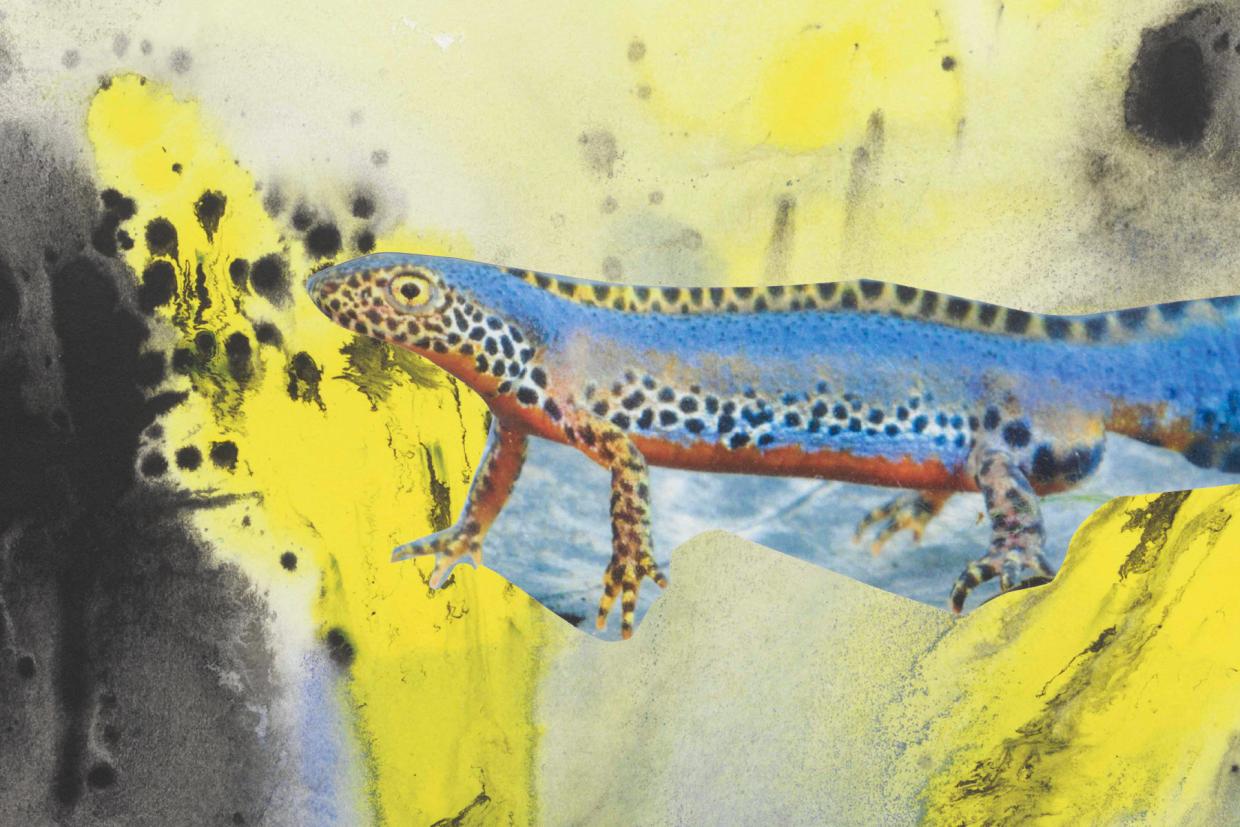
Then there are workshops on a more grassroots level. They grow out of the main ideas and themes in the show. For example, salamanders can grow back body parts, even organs. So we will make costumes to celebrate that.
The wind between the trees asks: How is the new entrance to the park celebrated? How will the Salamander Portal be opened, honoured and used?
MCH:
The gate is a round stone portal with carved patterns. It looks a bit like a science-fiction door that could open to all possibilities. Inside there is a metal gate with shapes like bubbles and small coloured glass circles floating upwards. The whole structure sits in the landscaped entrance path and creates a welcome for visitors. It is designed to invite people to enjoy the park.
The gate works both ways, to enter and to leave. Salamander sculptures climb up the stone and stand on the path, looking attentively in both directions. The gate locks at night, so it is also practical. We have planned a Salamander performance as part of the opening ceremony with the dignitaries on May 16th.
The wind:
Could you add something about co-creating with the children and young people, since you have collaborated with them in some way?
MCH:
I do not want to share too much, because it is a private process. But I can clearly say: yes, they have contributed, and I have enjoyed feeling their presence in the process.
Salamanders
The wind:
It might be nice to underline the salamander as a symbol of regeneration in relation to the portal. The salamanders will appear as sculptures, but also in performance.
MCH:
I guess you are always a bit all-knowing and superior, as you are an element—but yes, you are right. I was very excited about the idea: a round portal covered in salamanders, as if they are the guardians of the gate. What fascinated me is the almost mythical fact that salamanders can regrow not only their tails, like lizards, but also important organs—and even parts of their brains.
The feedback from the children was: “More fairy, less scary.” So I tried to make the gate as colourful and light as possible, even though it is a permanent structure made of metal and stone.
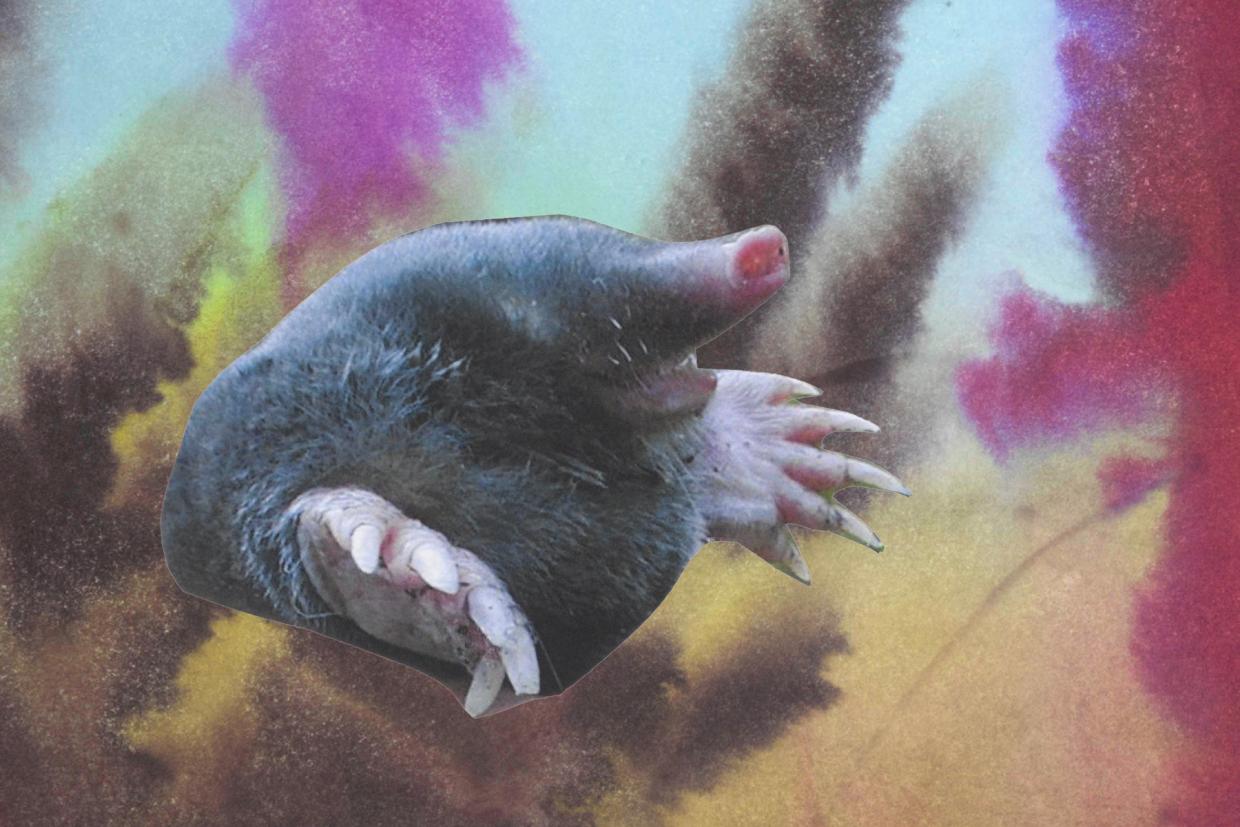
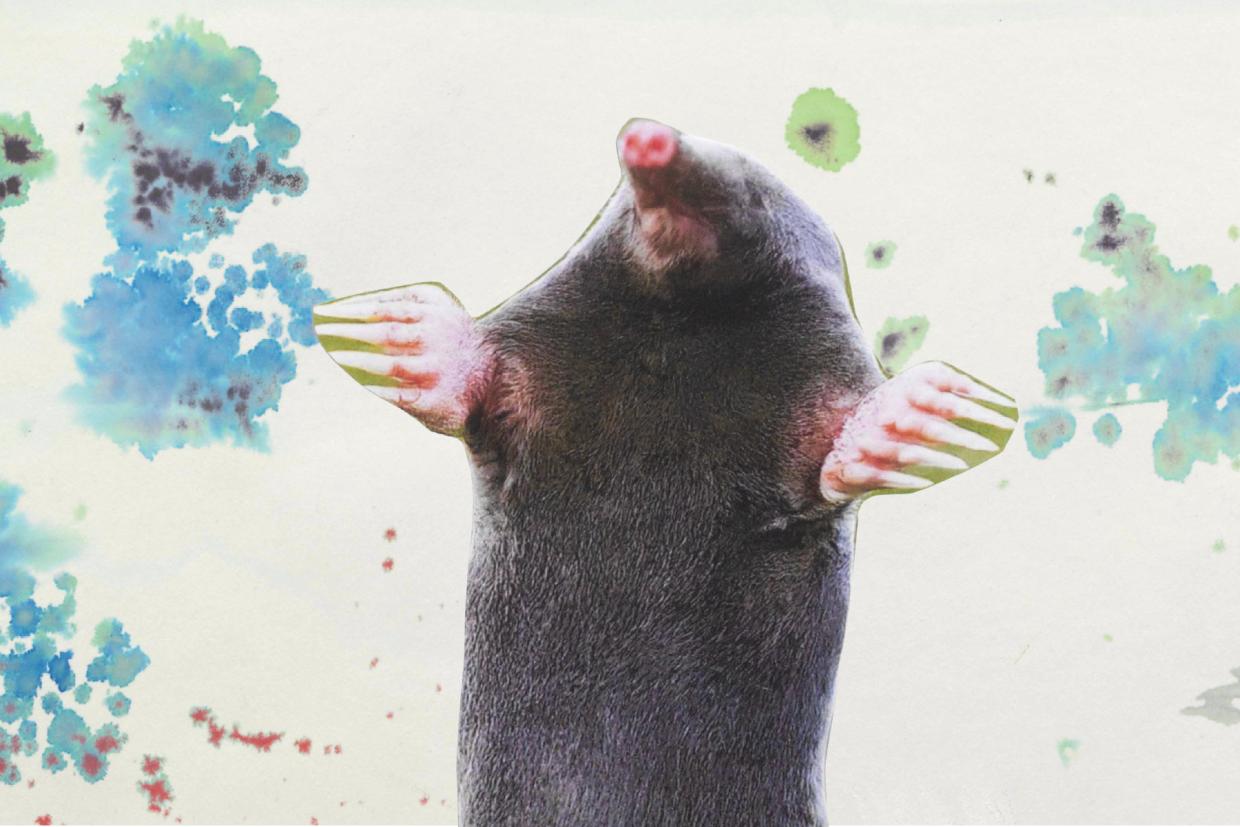
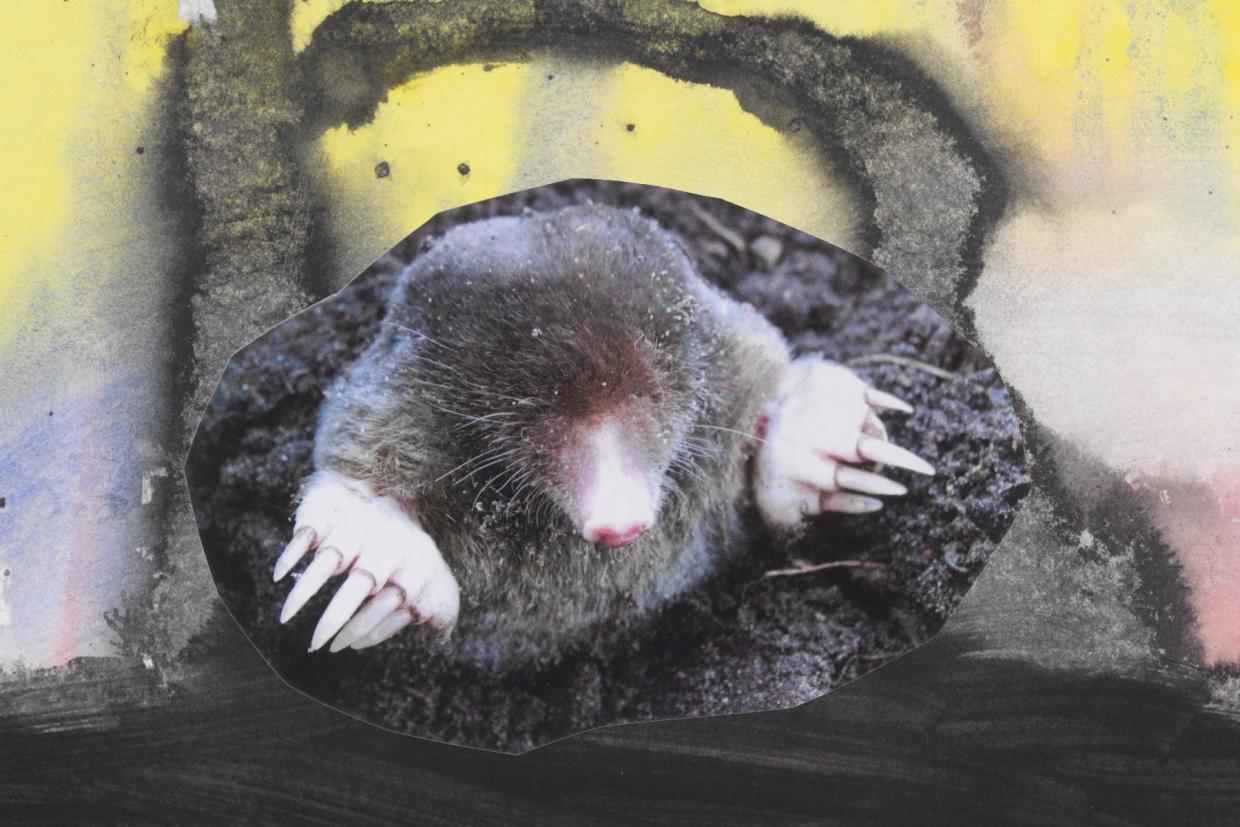
The moles ask:
How can our molehills be celebrated?
MCH:
First I need to understand them. Is there a system? Are you as organised as naked mole rats, the only mammals that live in a hive formation? In my mind I can see a map of what is going on under the ground, connecting the mounds above. I can imagine watching the mounds and even jumping over them like in the game leapfrog. But I do not know if this annoys you a lot. I do not yet know what you really like. I can at least make a start. I can try reading from the book Atlas of the Invisible (maps and graphics that will change how you see the world) and see if your molehills start to form patterns I can understand.
The fungi:
What is it you wish to know?
MCH:
I have come across a magical ring of mushrooms in a forest clearing. I have stood there, staring at the perfection of this small adventure that seems to happen with no one watching. I feel that the performances I make, over many years, create a kind of network and invisible support between the friends in the troupe.
I also feel a link to the history of heretic movements and other groups that are now only a faint trace, but that stood for positive, lively non-human animals living in an interesting way. I want to know if you can see this “friendsmaking machine” that the performances seem to offer. Can you see the tiny threads of warmth, humour and satisfaction that exist in my performances? Or do you only see the simple circle of us standing on the grass, ready to dance?
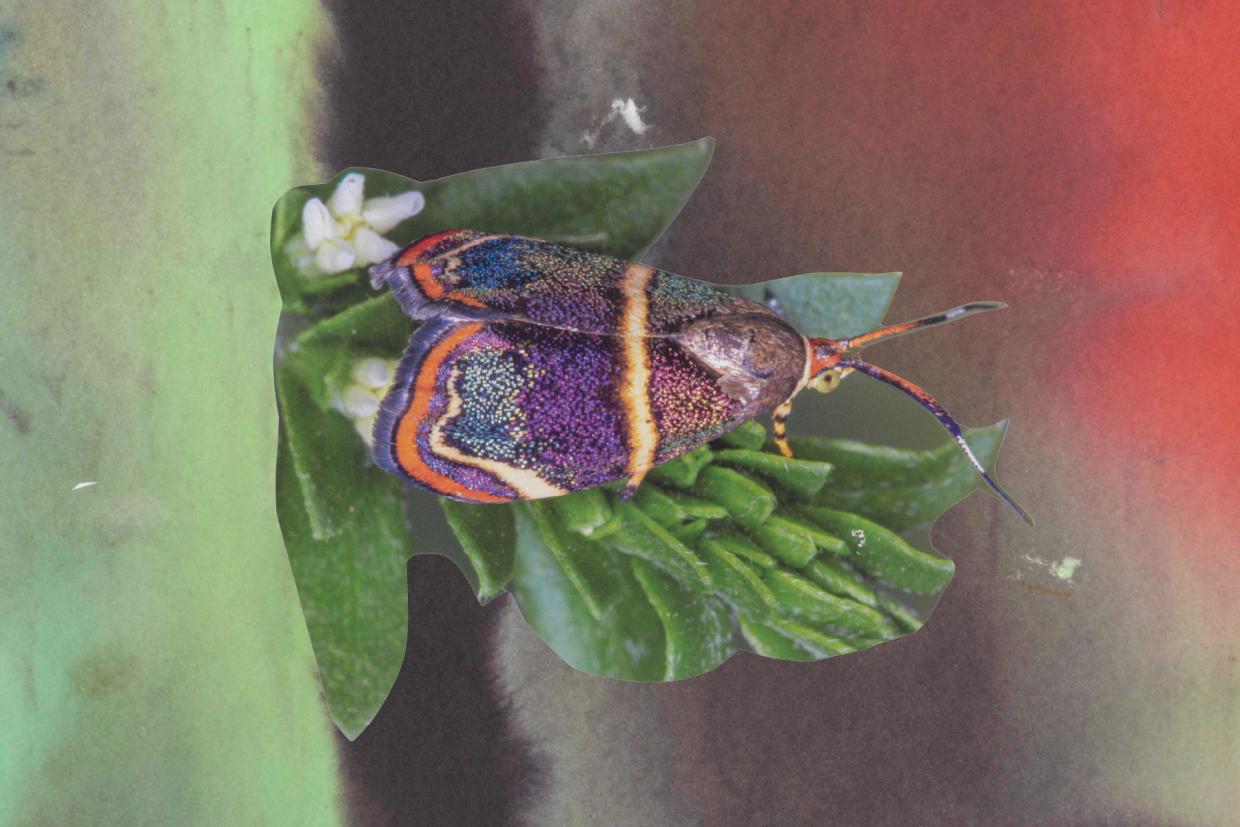
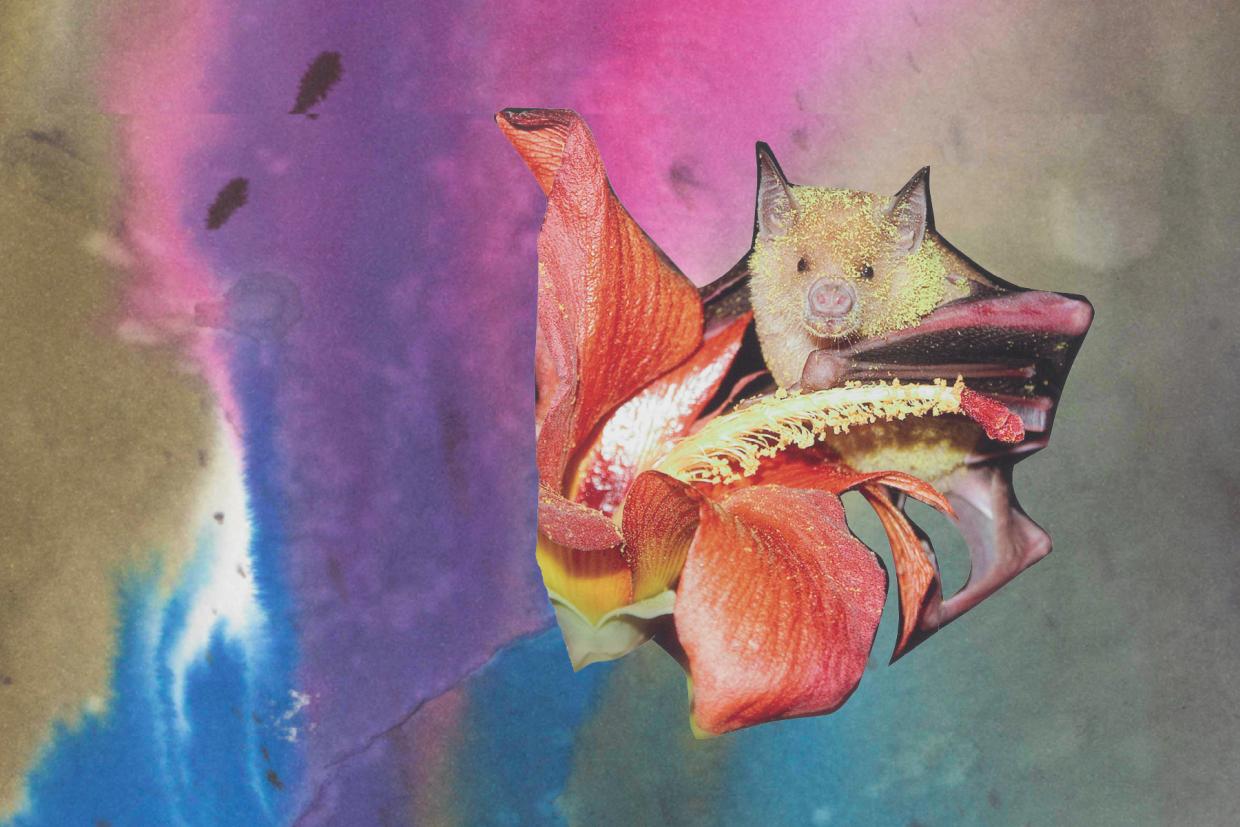
A Friends Making Machine
The fungi: Tell us more about the title of the show: The Friends Making Machine, as a concept. Does it exist only in the performances and workshops with you, or can it also exist in the installations, or even beyond the show? Is it something people take with them when they leave?
MCH:
Yes, it is exactly that. The threads of connection that are created during the performances, in the preparation, during the live moment and after, are all linked as if by threads. This special “material” feels totally weightless and not restrictive, but it still gives strong support. The memory and warmth of knowing you are part of the troupe brings a feeling of belonging and community, but without taxes, contracts, or having to balance favours. It is temporary. It is only beautiful, hypnotic and enchanting if you decide to enter into the “play” of it.
The mud asks:
How does your research become live and become a tonic that helps people have good experiences and happy memories?
MCH:
I work with storytelling and I mix different stories. For example: people have seen elephants having funerals for their dead. This fact stays with me. It shows that non-human animals have more awareness than I usually admit. I would like to build hand-operated puppets that act out an elephant funeral. It would be slow and melancholic. We would not explain it in words, but the time and effort of making the costumes and puppets would say a lot to the audience.
I would place this action next to another storytelling moment, maybe the origin story of Dr Dolittle, or the idea of the latex puppet costume of Jabba the Hutt slowly breaking apart and ageing because it is biodegradable.
The mud:
It sounds too complicated. Does the audience understand what you want to say?
MCH:
Yes. For the performances I make small booklets. They are full of collaged images, references and credits that are important to share. There are usually music credits and sometimes spoken word texts. But you are right: the mime and puppetry ask the audience to make a “leap of faith”. I have found there is an intuitive connection with the audience. In a surprising way, people often do find the hidden messages.
The red fox:
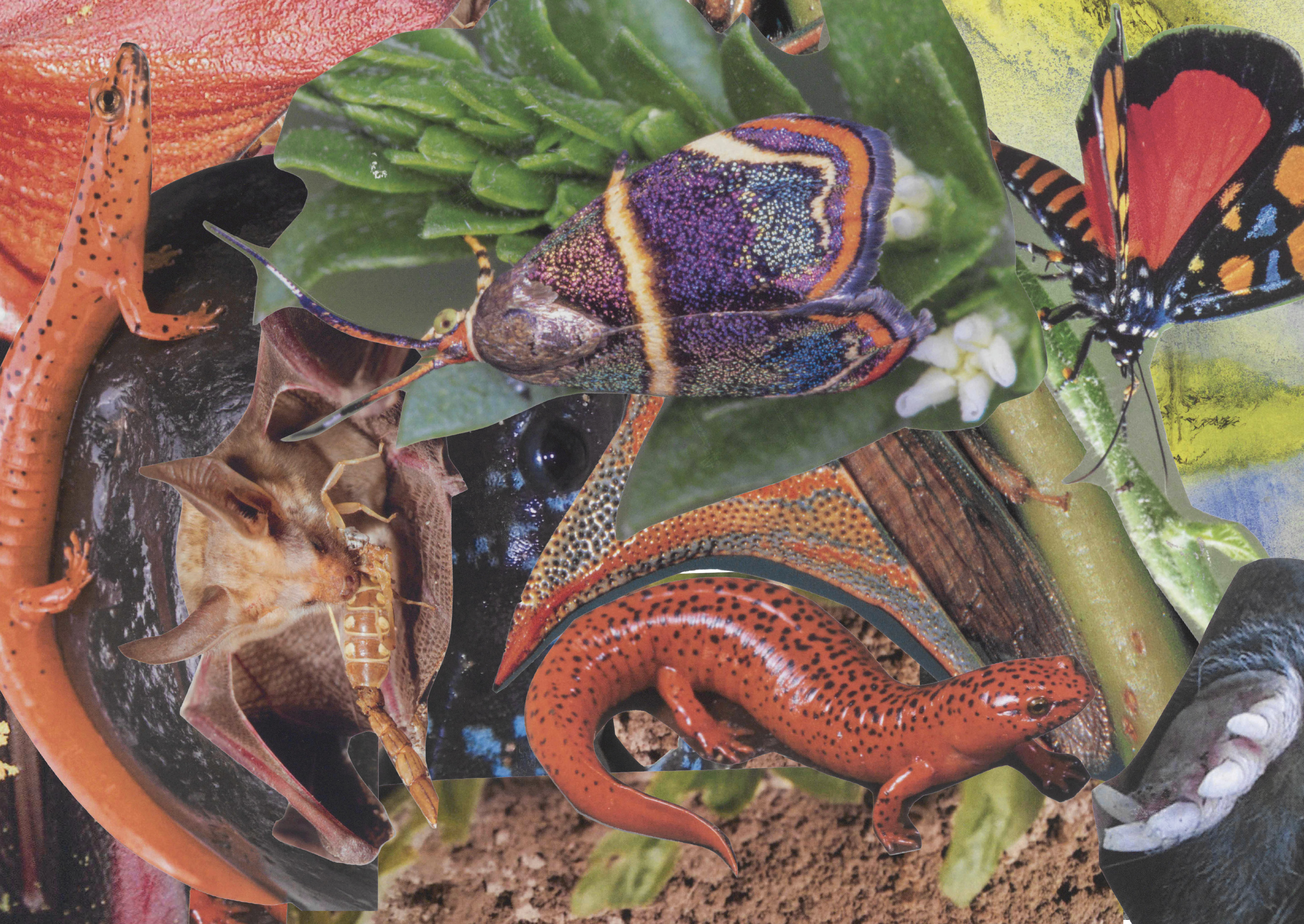
I am drawn to your use of collages and papier-mâché. Of course, collage is not only adding materials. It is also a special way of creating meaning and layering stories, am I correct?
MCH:
My default way to tell stories is with mime and collage. I love the concept of the bricoleur as well as other cultural heroes such as Mikhail Bakhtin.
The red fox:
Claude Lévi-Strauss says that “savage thought” (la pensée sauvage) is complex and concrete. It uses sensory, local details—like myths and natural categories—to understand the world. It is similar to scientifi c thinking, but it uses different, “wild” methods.
A flea in the fur of the fox shouts: Lucy Cooke! Have you read ‘Bitch’?
The red fox: Lévi-Strauss describes this way of thinking as bricolage, through the fi gure of the bricoleur. The bricoleur builds structures using whatever materials and symbols are to hand.
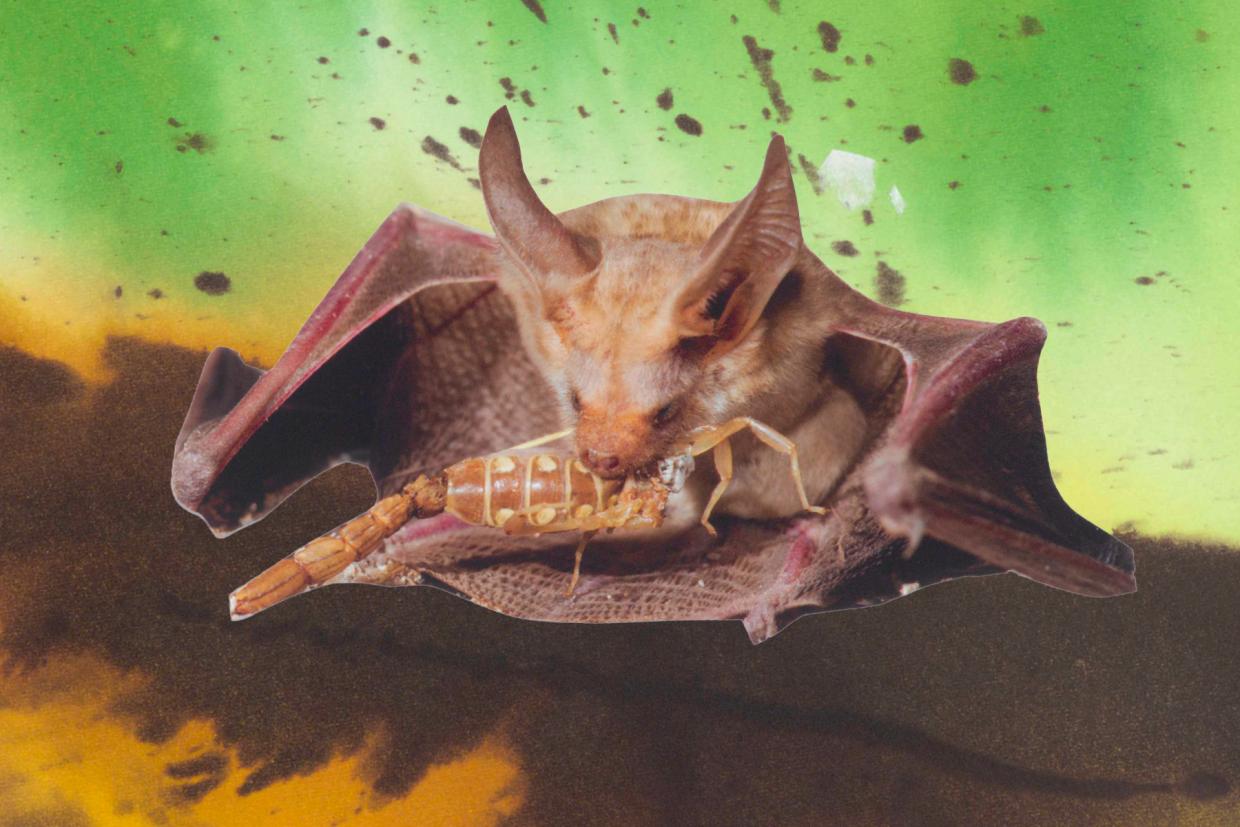
The red fox: The bats are also possible interview partners in the park, no? Maybe they want to talk about themselves. Or they could give you a chance to talk about playfulness versus punk, or about doing things on their own terms.
MCH: I love bats! Red Fox, you are so mesmerising, I can’t concentrate on your question any longer. Will you dance with me?